Jade Montserrat
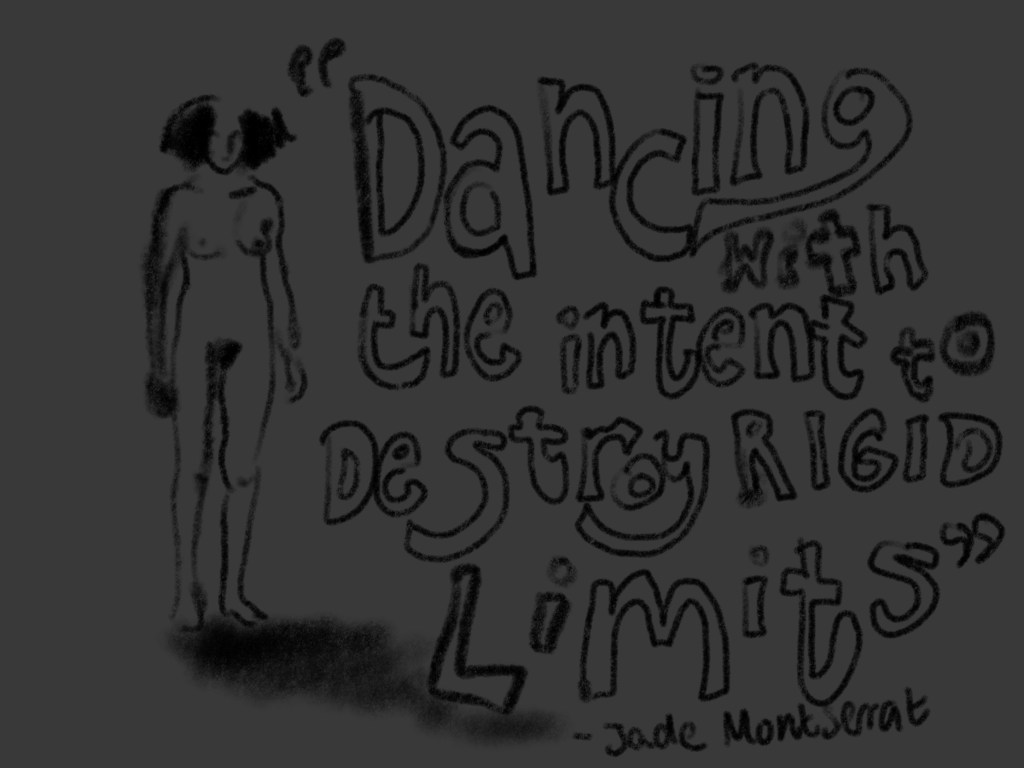
Jade Montserrat is an artist whom expresses herself politically through many mediums of art, ranging from charcoal to performance. Specifically she spoke about her project titled “The Rainbow Tribe” which is a nod to – and inspired by- Josephine Bakers own rainbow tribe whereby she raised a group of multicultural children. Montserrat’s work aims to address such issues such as gender inequalities alongside a large focus on racism, reflected through her “Rainbow Tribe” project which places focus on prioritising an approach to these issues which effectively deals with controversial, sensitive attitudes marginalised artists have to face. In her talk she describes the Rainbow Tribe movement alongside a video of Josephine Bakers ‘Banana Dance’ alongside her own take titled ‘Mirroring Josephine’, she then addressed the reaction it received and explained how whilst she previously worked naked, she opts to no longer as the meaning becomes lost within sexualisation and fetishising that she encountered. For me I found it fascinating how she chose to counter oppression, combining words and performance to form a powerful image; the impact of this being emphasised through her choice of working naked. Her most resounding work, for me personally however, were her videos which contained no words and no direct eye contact or connection to the audience. This is because whilst appearing to be within her own world, Montserrat was able to still captivate and intrigue the audience but not in the sense that she was performing for them (as a traditional ‘nude’ would, but more that she was representing something and expressing that to them which I found particularly insightful and resounded with me most. From further investigation I found she worked for the The Institute for Black Atlantic Research which must play heavily into influencing her work, allowing her to apply that knowledge and share it through her activism. In relation to my own work I want to experiment with performance art, and combine something as simplistic as charcoal with it as she has, so as to achieve something more complete and resounding with the audience.
Marie-Antoinette Chiarenza and Daniel Hauser
Marie-Antoinette Chiarenza and Daniel Hauser presented a lecture about their collaborative art work. This entails collaboration with other people within their work, whether the person is aiding the construction or is actually part of the art presented. A lot of their work is associated with phrases such as ‘you pay but you don’t agree with the price’ put upon a plastic cup. They explained that this was an attempt to question economic associations alongside the cultural impact of such. The exploration they described as the social impact of these is something I found particularly captivating and very provocative in the way it made me think about my own choices within my art which is something I’d like to attempt to integrate within my own art work. I didn’t like how I felt unclear with the purpose of some of their work or what their work was actually portraying however this was probably due to poor interpretation upon my part. Looking into this, in particular the piece titled ‘you pay but you don’t agree with the price’ I did grasp the basic understanding but through further research learnt how it did not only aim to question the price, but the complaisance of society in just accepting such prices and how this reflects on its dynamic.
Larne Abse Gogarty
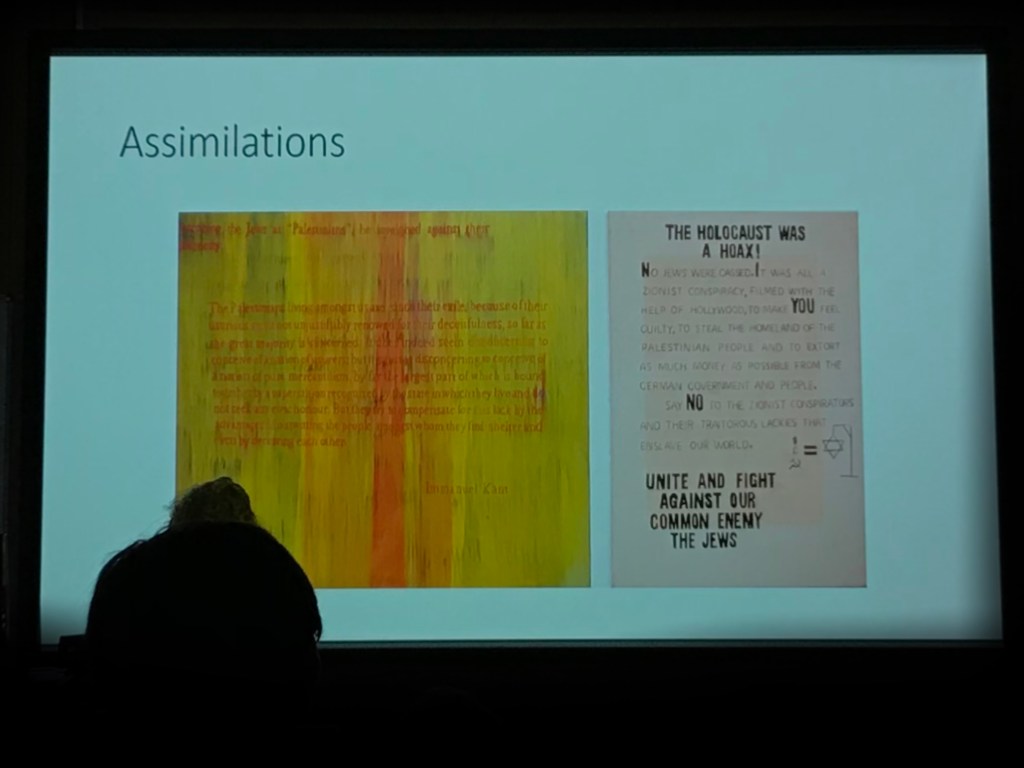
Whilst I was unable to attend Larne Abse Gogarty’s lecture I decided to do my own research into their practice and the meaning behind it. Through this I discovered she was an Art History lecturer and much like other Artists / Art Historians had a practice which heavily divulged within the realm of politics. Larne Abse Gogarty’s work seemed to be more so evaluation highly political topics rather than art itself from what I gathered which, whilst I find it highly effective in evaluating art and conveying a direct clear point, I myself found it quite difficult to read her books and articles. The topics themselves were fascinating in particular feminism and also her interest in Marxism, however as a whole I struggled to read the content so didn’t receive the intended message. Whilst in my own practice I’m interested in exploring more politically based work, I don’t think I will use the same style, such in depth evaluative writing as my sole approach to the point I’m conveying.
Rachel Garfield
Rachel Garfield is an artist whom tackles issues of subjectivity of minority groups(often Race) via video and also paint. Some of her work places a humorous twist upon how it is presented, for example asking her friend to account a racist experience but as if he were ‘chatting someone up at a bar’. This allows her to tackle and draw to light issues of racism within society in a way that engages people without confrontation and draws people in. I find this particularly interesting especially compared to the somber way most other artists confront these issues. I myself attempted to use this humorous take upon serious issues when making a political piece, using grotesque cartoons of politicians to create a funny atmosphere when tackling such a sensitive issue. I found this way of tackling a piece created conversation-which I liked a lot more- and would prefer to keep with my future artwork.
Arrianne Churchman
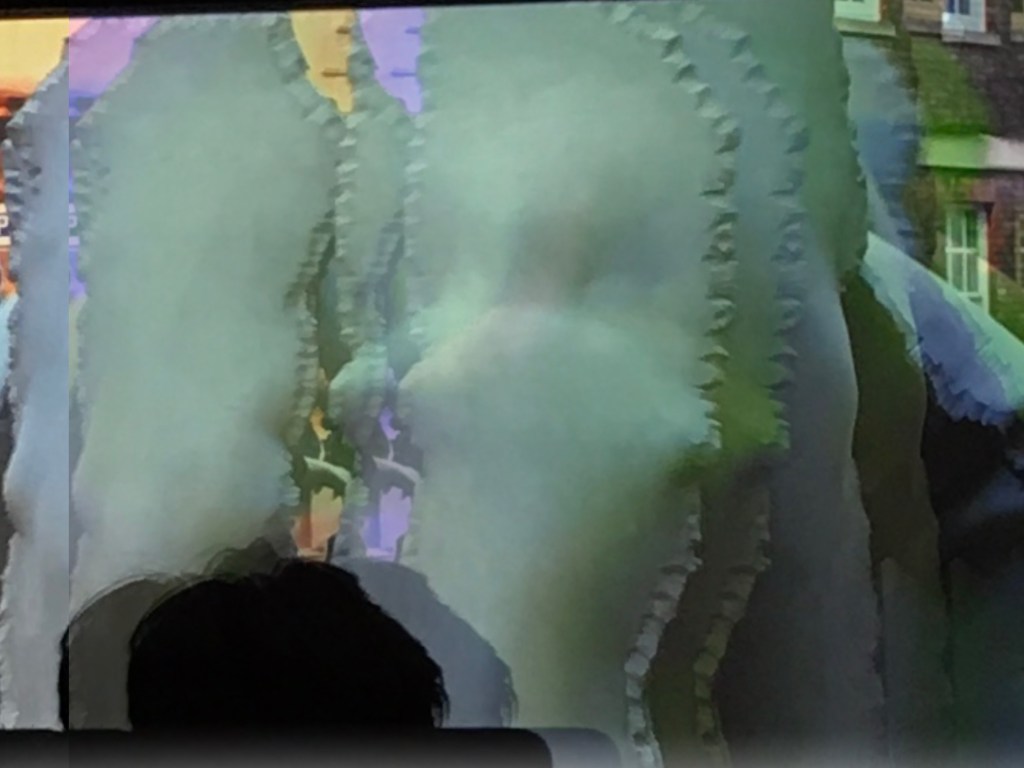
Arrianne Churchman presented me with a form of art that I am not so familiar with, by the way of practice or viewing however one that I found particularly fascinating. Within her work she uses performance in order to explore British Folk Traditions re imagining them within our modern life. This calls for some unique work touching on many traditions across England and interpreting them, one most prominent was her performance piece looking at talking to spirits due to its separation combined with yet an immersive ‘reaching out’ to the audience. Whilst I disliked the fact a lot of the videos had a separation from the audience, I did enjoy the contents of it particularly how you were never quite sure what was going on despite how they portrayed traditions. From this I would quite like to create a video piece, maybe even taking inspiration from spirituality however produced one a lot shorter and less focused on watching one person doing something repetitive.
Bedwyr Williams
Bedwyr Williams, for me personally was one of the most inspiring artists whom I saw at the Artist Talks. I found his style of art (and presentation) to be chaotic and ubiquitous but all of this was captivating and kept me interested throughout. His art style was massively varied ranging from simple sketches to performance art and just like the variation of media he did not constrain himself to one theme but what ever art he felt like creating; he did. This lead to a variation of entirely unique pieces such as some heads packed together under some stones, contrasting another piece which was opposingly performance art where he created his body out of cake and narrated as he cut it up and fed it to the audience (having none left by the end of his exhibit). Arguably this art style was most Interesting and entertaining to me personally and is one artist whom I would like to take aspects from to include within my own art work. These aspects being how sporadic and random each work of art was- as I myself don’t want my art to be constrained to one common theme or art style. Another particularly interesting concept was allowing the audience to edit your art -as seen by the cake- as I found this both hilarious and particularly intriguing so hope to take inspiration and achieve something similar.
The Stuart Hall Project
The Stuart Hall Project is a movie comprised of interview recordings and television clips (considering Hall was on TV for 50 years), and after further research, is paired with the Three-screen video instillation The Unfinished Conversation. This instillation explores all the ways that hall influenced Black identity within society as the film as Hall explored societal change and what in turn society makes of us and provides for us. Art films are usually not my preferred art medium especially if they are longer than three minutes however the contents of this was a lot more fascinating than just a series of images and music so this paired with its actual contents was very interesting and changed my perception of art within film. Identity is a topic we all relate to (with this film specifically being in relation to black identity ) so is a subject matter most artists explore and after watching this film; alongside other artist talks such as Rachel Garfield, I would quite like to explore this topic. I may chose to explore video art as I find its premise intriguing and feel it does this topic justice.
Born in Flames
Born in Flames is a film set within the 1980’s set as a Feminist Documentary following two feminist radio stations (Phoenix radio and Ragazza Radio). The documentary explores female oppression from the government, segregation and women uniting against this common enemy. The combination of narration, videos explaining, and clips of the radio groups singing pieced together an image of female unity in the face of oppression alongside various shortcomings they had. This style was engaging and helped both build a narrative and make a compelling case for feminism. After the talk was over Angus discussed the possibilities of making something similar using university resources making a compelling point how easy it would be for us as students to make something similar. This was quite inspiring as I have always considered making a video piece but lacked the resources and inspiration to do so but watching Born in Flames allowed for a tangent of thoughts leading to several video piece ideas myself; perhaps addressing issues such as the Croydon riots.
Karen Sandu
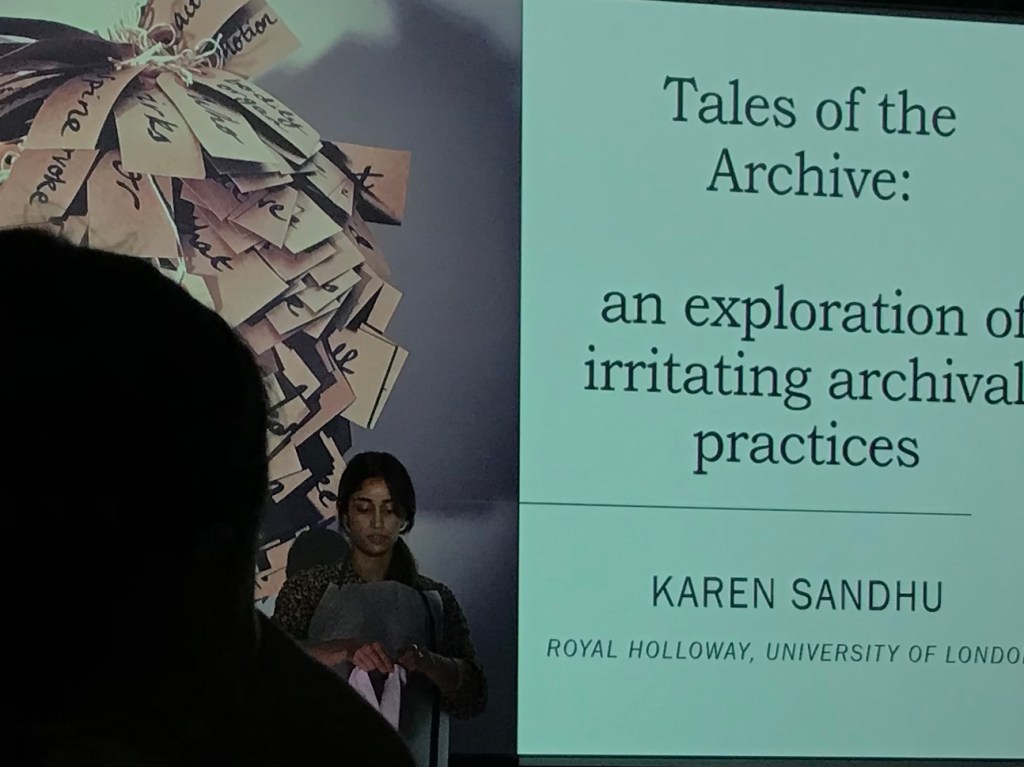
Karen Sandu’s work explores the concept of allergy’s within art, ‘Tales of the Archive; an exploration of irritating archival practices’. Existing as a series of poems her work invites the reader to navigate through a fictional site. At the centre of her achive she has an artists book embedded with allergens To provoke a reaction, imagination of an allergic human interacting with such an interaction. Her work exists to be seen as a high risk sight. All of this is imagined, a metaphor that art can be an irritant. Within her series of poems she has fragments, a play on language in order to highlight sincerity and warning. The main idea of her art is the concept it could exist anywhere, that the reader could be irritated by anything at any moment.I found the concept of her artwork fascinating, as it was a type of art I had never come across before. I had seen art that had used words but never in the sense of the creation of a theoretical space. The fact this requires direct interaction with the reader with something highly relatable and personal allows for an experience within art rather than a viewing. Id like to try this within my own work via creation of thought provoking or exercising of the imagination. Later on within her talk she also related her work as a reflection of culture and society which I also found quite interesting that something with an appearance of one thing could be a metaphor for another.
Lawrence Leaman
Lawrence Leaman is both an artist but primarily his focus within his talk discusses co-founding and organising the non-profit gallery Piper Keys. He discusses originally purchasing it and the struggles of having to live within the gallery in order to fund it, having to separate the rooms with a wooden board. He explains the motivation to create a gallery for any artist open to the public free entry and wheelchair accessible. It provides an area which allows for an introduction to art whilst also having an area to socialise. Leamen goes over the shortcomings when figuring out the logistics of setting up difficult artworks such as a sprinkler. Through this he goes over the consideration of the effect of such exhibits upon the structure of the gallery and the other exhibits within the same space. This talk drew my attention away from what my mind always thinks to in regards to art-creation of work- but instead how I exhibit and exhibition spaces. Whilst I myself do not strive to be a gallery owner it did open my mind to considering exhibition during creation within my practice, how big, the trace left on the gallery, the effect when exhibiting on the viewer. This talk allowed me to view within my practice a consideration towards the end of my project when I have always considered idea and creation which has allowed me to see both a bigger picture and as a result alteration of my artwork to further engage and effect reader.
Hamishi Farah
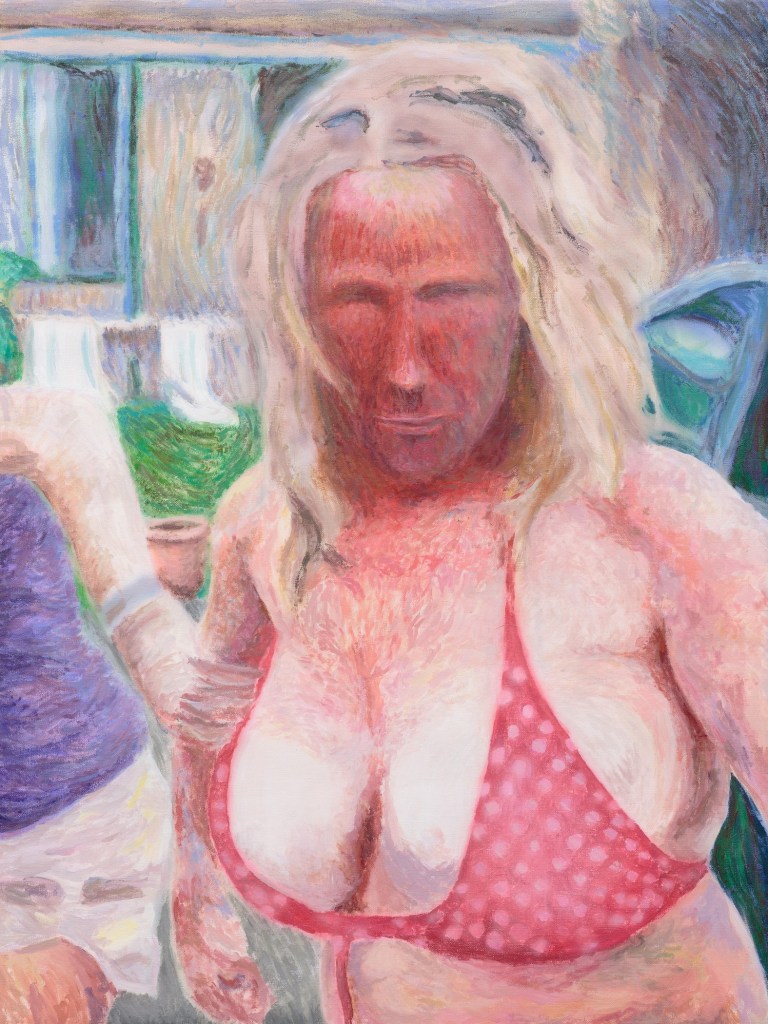
Hamishi Farah is an artist whom uses painting to question society and its response to the world. This was done following his imprisonment due to ambiguous terror law’s within the US, and after his return to Australia he stopped his production of Australian art in order to flag up a culture of ‘flagrant insecurity, empty virtue signalling, institutional racism and a socio-pathological inability to reflect. As mentioned before, political at is something I have taken inspiration from before and found to be quite intriguing. Like all art it is a reflection of the artists personal beliefs and opinions however when becoming political, it becomes easier and more relevant for the viewer to interpret and often exhibits a stronger response which is what I found with Hamishi Farah’s work. Whilst political art is not my chosen art from, it is one, especially as I experienced in this lecture, that I am fascinated by; particularly as his chosen medium is painting which is one I turn to quite often. Whilst I dont intend on doing any political art immediately after my more recent piece, I am quite interested to explore painting in a style similarly to Farah’s. The almost visible brush strokes bring more life and motion to the picture which is not something I am as familiar with, as all of my paintings are highly blended and smooth which is why I’m so interested to experiment with Farah’s style.
Karen Kramer
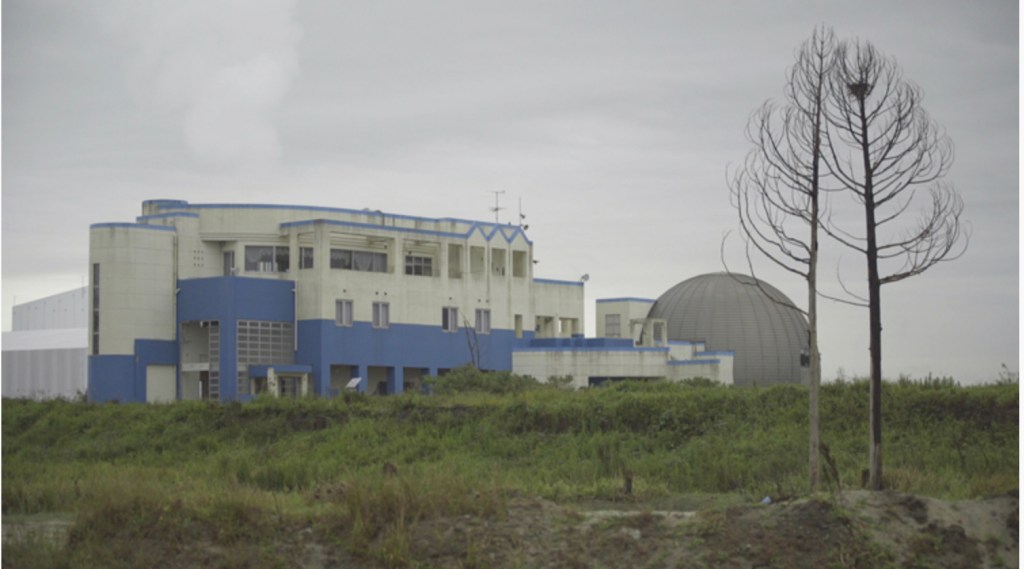
The focus of this lecture was Kramer’s film The Eye That Articulates Belongs on Land. The focus of this was the presentation of images of her visit to Shiretoko National Park (north of Japan) in which images of ‘unspoilt nature’ surround the atomic plant representing evidence of the ‘re-wilding of the landscape’ as following the tsunami became off-limits to human access. She claims her film is not evidence of transformation and recovery but instead a way to highlight and remind us of our perceptions of the natural environment and how these are often deeply subjective and as a result exposed to being tainted by partial knowledge. I found Kramers film very interesting , whilst I often find myself bored with video art I found the connection to a real event and the subtle imagery quite fascinating. This imagery is found for example in the foxes patrolling the waters edge within her movie, which emphasise the idea of a line between material and ethereal due to the significance within Japanese culture of a fox having the ability to morph between human and animal and commune between the living and dead. Whilst I currently do not intend to work upon producing video art I hope to take the use of subtle imagery and hidden messages Kramer uses and apply them to my own art as that concept can be quite fluid between mediums. This is especially regarding my exhibition piece where I intend to use silk to bring to mind seduction and beauty referring to how I feel about the subject matter.
‘Ecology ‘ A film by Susanne Collins and Susan Dowling for Art 21
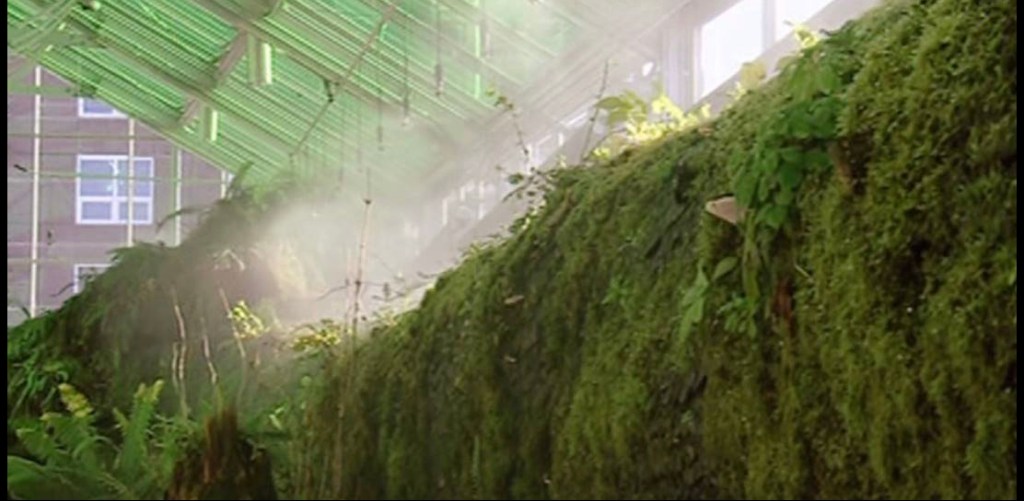
The film ecology tackles an exploration of the tenuous relationship between nature and culture taking particular interest in exploring the relationship between ‘man’ and earths forged by working the land, the foundations of scientific knowledge and in turn the impacts of technology on biology alongside the submission of wilderness to civilisation. The interest of this film in regards to me is the face it incorporates the work of not one but four artists exploring the above themes in different ways. This is particularly intriguing as it opened my mind up to the fact that one theme within art could be explored through a variety of approaches and mediums (as is reflective in my exhibition piece titled Manipulation of 430-750THz ). The first artist Iñigo Manglano-Ovalle connect natural forms (etc. Clouds and DNA) as metaphors for a way to understand major social issues (etc. Gun violence and human cloning). Within his work he harnesses extraterrestrial weather patterns transferring this data into digital video projections and sculptures via computer rendering. This approach was something I hadn’t experienced before and whilst data was something I never connected to art this approach brought a new way to view and achieve manipulation of this material which was interesting and tangible. Each artist within this film bought a new perspective and way of tackling the concept of ‘Ecology’ ; Mark Dion uses archeological and scientific collection methods to explore the line between “objective” (“rational”) scientific methods and “subjective” (“irrational”) influences, Robert Adams used the redefinition of black-and-white photographs to reveal the impact of human activity on wilderness and open space (the photographs being of the American west) and finally Ursula Von Ryingsvard whom used sculpture taking visual cues from natural forms such as the human body and the landscape demonstrating interest in regards to the point when man-made and nature join. These various artists not only ignited interest in exploring using a variety of media to explore a sole idea but in turn made me want to explore the idea of Ecology within my own studio practice, particularly with the current political climate and the imminent threat of the effects of climate change.
Pipilotti Rist
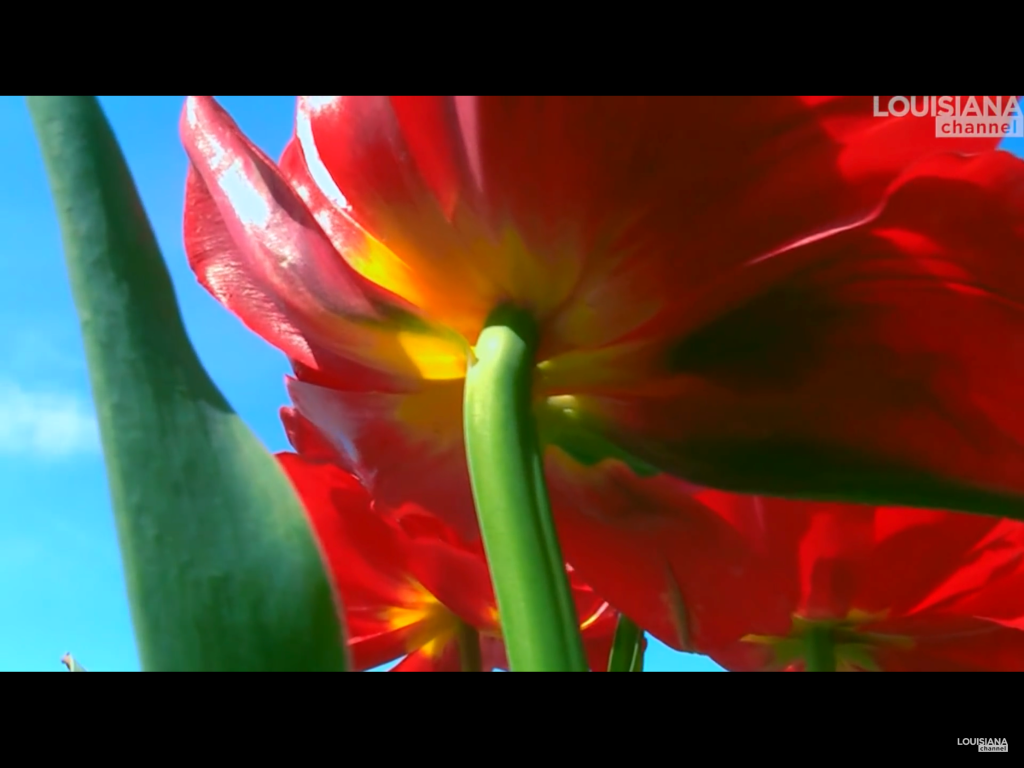
Within this lecture 4 videos about Pipilottii Rist were screened and within the first video(an interview with Louisiana museum of Modern Art (entitled Freeing the Wonderlight) Rist grabbed my interest when saying the ”normal life looks to me very surrealistic and surrealistic display looks normal” this bold claim stuck out to me particularly as it was the very opposite of comfort to me and what I know but coming from Rist it appeared to be fact. Her consideration of dreams being given the same importance to reality, equality between looking inwards and outwards. As a result of her refusal to separate principles such as inner and outer I found her work to remind me to be quite reflective of something psychedelic and quite thought provoking, the many perspectives images and colours providing me with stimulation to think around her work. In particular when she describes her medium of the camera showing the subjectivity of the body, the perspective it provides allowing us with a new angle to see from was something I enjoyed and allowed immersion within the art work which quite personally is my favourite type of art. Regarding my exhibition piece, Manipulation of 430-750THz, I wanted to translate this immersion with finding away to allow the audience of my piece to see my perspective and have the same appreciation for the focus as I did so therefore I intended a reflection of Rists fascination with perspective to translate in my own way within this piece.
Angus Wyatt
Angus Wyatt is a digital artist whom explores the concept of the artists place within the world. His lecture began with one of his Video-Art pieces where he is lying on a couch seemingly going through a bout of existentialism. A common theme translating in his video art was our idea of ’what the artist is’ claiming the artists job to be holding up a metaphorical mirror with the reflection being their opinions and beliefs translated onto the art work with the viewer looking through this mirror and seeing this reflection. This being the focal point of his art lead to other statements including the artist being a voice of opposition providing alternative ways of thinking, often with himself being the subject of his video art. Often art focusing upon the artist doesn’t interest me however this take took my interest as it became something quite relational to my being as I produce art and why I do it. Whilst I dont intend to bring Angus Wyatt’s particular style of video art into my own practice as I found it only kept my interest for half the screening time, I do want to translate the concept of the artists purpose for creating art as it was a concept I had never considered, always previously taking inspiration from very tangible physical objects rather than a philosophical concept.
 Avigayil Ashton